About Us
真田紐との出会い
桐箱に掛かる紐として見ていたはずだが名前は知らなかった。
見覚えのある紐をその名前とともに認識したのは三十数年前のこと。
家業の家具製造で、新しく屏風を製作するにあたり紐蝶番の材料として仕入れた時だった。
ちなみに紐蝶番は紐を用いて建具を支え開閉できるようにするちょうつがいです。伝統的に屏風などに使われてきました。
サンプルとして届いた様々な色や柄の真田紐。きっちりと織り上げられた佇まいに魅力を感じました。
それから十数年後、紐の生産者の方とお話しする中で、
真田紐の需要が減り生産者は数少なくなっていると聞いた時、
あの紐も無くなってしまうの!?さみしいと思いました。
それまでも家具の製造に関わる中で、様々な手仕事が無くなっていくのを目の当たりにしてきましたが、
時代の流れの中で仕方のないことだと受け入れていました。
きっと真田紐も無くなってしまうのだろうと、
さみしいと同時に諦めの気持ちがすぐに追いかけてきました。
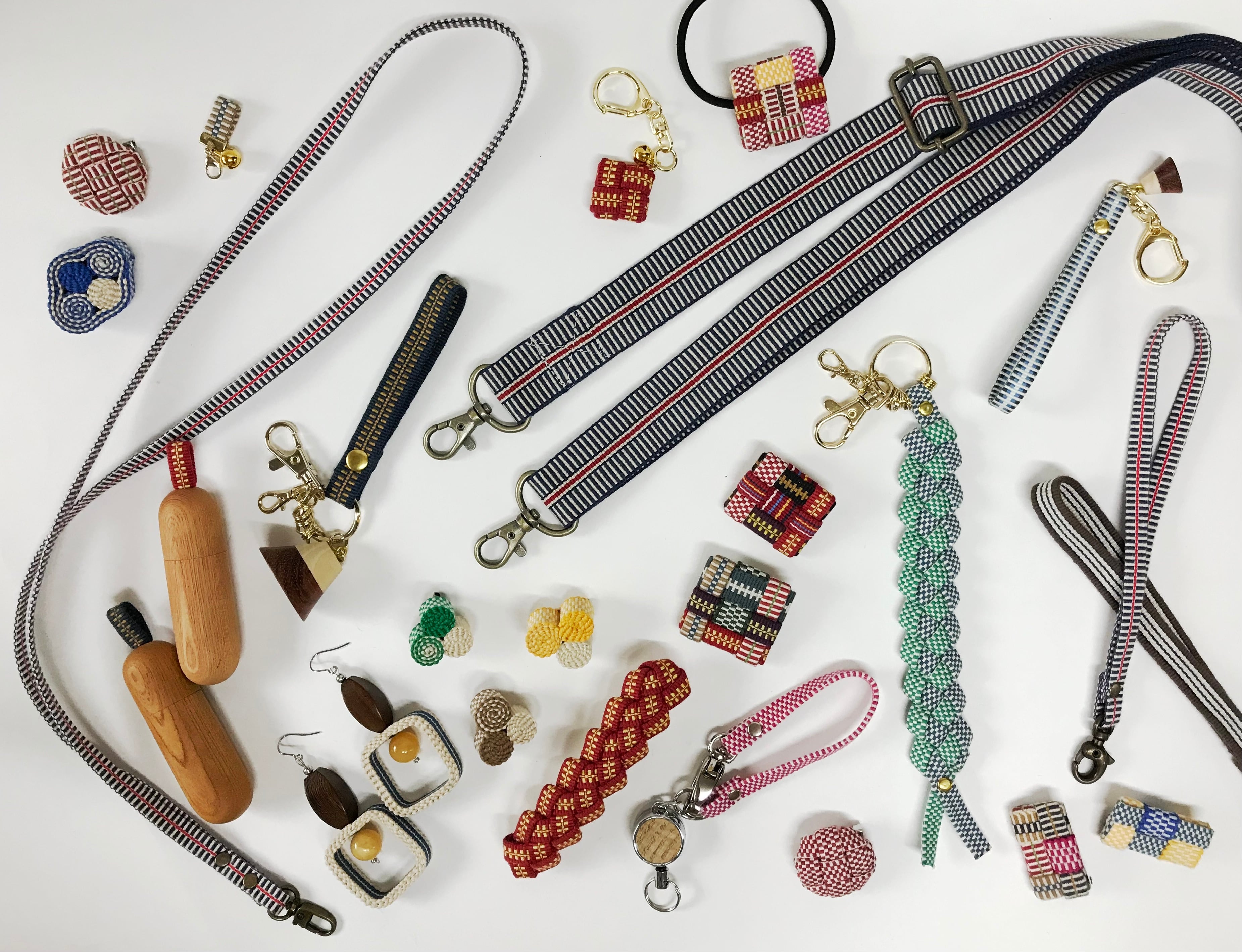
それでも、この紐を生かせないかと試しにネックストラップを作ったのが、真田紐にのめり込むきっかけでした。
やり続けると思いは膨らみ、今では真田紐を未来に残したいと願い、真田紐で何ができるのか、真田紐の可能性日々探り製作する毎日です。
Sanada-himo is well known as the cord used to tie paulownia boxes that store tea ceremony utensils.It was thirty years ago that I learned the name of that cord. It happened when I sourced it as a cord hinge material for making folding screens (byobu) in our family furniture business.(A cord hinge connects panels using cords to allow for movement; this method has traditionally been used for folding screens.)I was captivated by the beautiful weave and patterns of the Sanada-himo cord that arrived as a sample.Over a decade later、I felt a sense of sadness upon hearing that the demand for Sanada-himo cords has declined and the number of producers has dwindled. Yet, at the same time, a feeling of resignation set in.It is because I have watched so many familiar things—such as furniture and traditional crafts—disappear.Nevertheless, I wanted to make use of this cord. It all started when I made a neck strap, and I have been passionate about Sanada-himo ever since.In the fifteen years since then, I have dreamed of preserving Sanada-himo for the future.
創房荻須(そうぼうおぎす)について
- 所在地
- 〒421-0112 静岡県静岡市駿河区東新田5丁目8-14
- TEL
- 090-6366-6008(内山)
- 営業時間
お支払い方法について
以下の決済方法がご利用いただけます。- クレジットカード


- 携帯キャリア決済



- 銀行振込

- コンビニ決済・Pay-easy

- Amazon Pay

- PayPal決済

送料・配送について
1回あたりのご注文金額が5,000円以上の場合は送料無料です。配送方法は「定形外郵便」「レターパックライト」からお選びいただけます。
※商品のサイズによりレターパックライトのみのものもございます。予めご了承ください。


